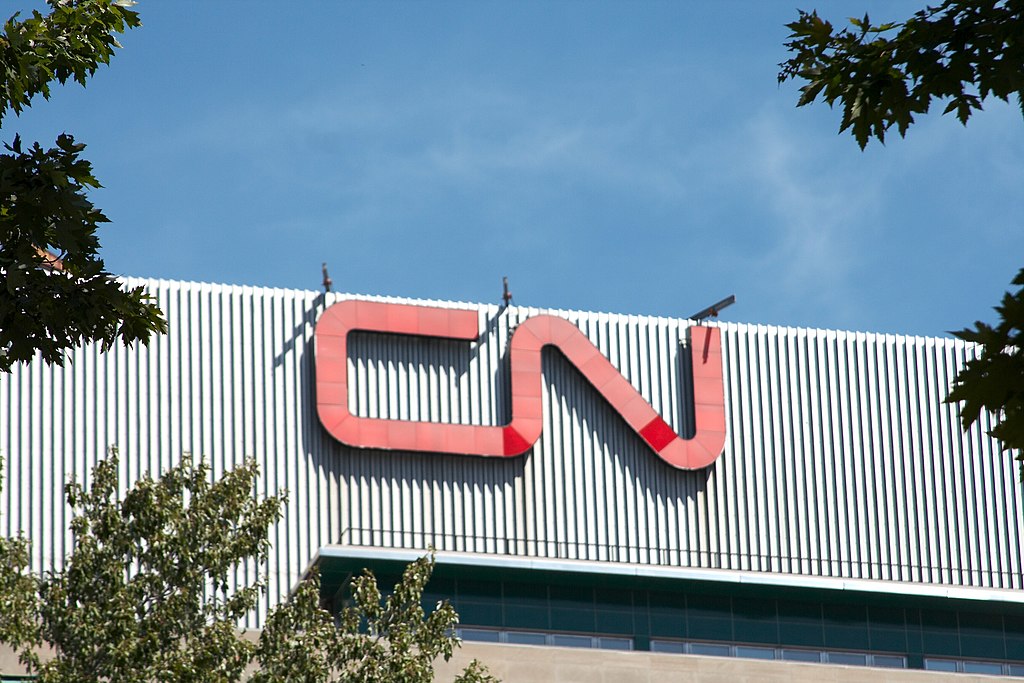
CN Rail has been ordered to pay a total of $34,500 in two separate harassment cases after an arbitrator found it failed to properly investigate employee complaints and allowed intimidation in the workplace.
The rulings from the Canadian Railway Office of Arbitration & Dispute Resolution conclude cases involving Canadian National Railway and Teamsters Canada Rail Conference, where the arbitrator determined appropriate monetary damages following earlier findings of harassment and workplace safety violations.
Supervisor intimidation and management discrimination
In the first case, a supervisor identified as Mr. O. intimidated an employee, Ms. C., to the point where she “hid in the bathroom in fear” after hearing him “yelling at the crew of 602 to disregard what she had told them.” The arbitrator awarded $7,000 to Ms. C. and $7,500 to the union for the company’s failure to investigate.
In the second case, a more severe incident involved a general manager, Mr. M., who the arbitrator found had “demonstrated a blatant and discriminatory attitude towards the Grievor on the basis of physical disability” which was “deeply disturbing” given his leadership position. Mr. M. attempted to “intimidate, belittle and humiliate” the employee for what he perceived was “oversensitivity” to hearing about a suicide on the tracks—particularly concerning as the employee had previously been part of a crew involved in such an incident.
The arbitrator noted Mr. M.’s comments “were made in a situation where it should have been obvious to Mr. M. that the Grievor was particularly vulnerable, given that he was pale, sweating, shaking and in obvious physical distress,” which “increases the significance of that insensitivity.” The employee was so distressed that he left the meeting when denied union representation and was eventually off work on short-term disability for two months.
For this second case, the arbitrator awarded $8,000 for “pain and suffering,” $5,000 as “special compensation” for the manager’s “wilful and reckless breach” of human rights, and an additional $7,500 to the union for the company’s failure to investigate.
Failure to investigate complaints
In both cases, the company’s failure to investigate the harassment allegations was a central issue. The arbitrator emphasized that this failure constituted a breach of Article 152 of the collective agreement, which requires the company to maintain a “harassment-free workplace environment.”
The arbitrator rejected the company’s argument that it failed to investigate because allegations came through the grievance process rather than its harassment policy channels, stating: “That did not explain why individuals who assess grievances at the Company did not see the serious allegations and/or arrange for an Investigation to immediately occur.”
The company claimed it had since “implemented a process to ensure that complaints submitted via the grievance process regarding alleged harassment are reviewed in accordance with CN’s Workplace Harassment and Violence Prevention Policy as well as the Canada Labour Code Regulations on Workplace Harassment and Violence Prevention.”
Despite these assurances, the arbitrator determined significant financial remedies were necessary in both cases.
Determining appropriate damages
The company initially offered just $2,000 for each ruling, later increasing to $3,000, arguing damages should be limited because the incidents were “limited interactions,” conduct “was not repeated over several occasions,” there was “no evidence of long-term or permanent consequences,” and the grievors “did not suffer any loss of wages or compensation.”
The arbitrator rejected these arguments, calling the company’s initial offer “de minimis” and stating that level of damages “does not serve either to ‘censure’ or ‘deter’ the Company, let alone provide damages for the harassment which occurred.”
In both cases, the arbitrator emphasized that damages served a dual purpose: providing compensation for harassment experienced by the grievors and “censuring” the company to “deter any viewpoint that an investigation is optional and only required if a Complaint is filed under the Policy.”
Different legal frameworks applied
The arbitrator distinguished between the two cases in terms of applicable legal frameworks. In the first case, the arbitrator noted that human rights jurisprudence was “less helpful” because “it was not found that the harassment against this Grievor resulted from a protected human rights ground, such as sex, race or disability.”
However, in the second case, the arbitrator determined the company had “breached the Grievor’s protected human rights, as the belittling which occurred of the Grievor was based on his physical and emotional responses to this trauma.”
The arbitrator considered that under the Canadian Human Rights Act, which governs railroads, there are statutory caps on damage awards — $20,000 for “pain and suffering” and another $20,000 for “special compensation” in cases of “wilful or reckless” misconduct.
In assessing the second case involving the general manager, the arbitrator considered the manager’s position of leadership particularly relevant, noting he “was to provide leadership to ensure the Company’s policies were respected.” The arbitrator concluded his “disregard of his training would be considered to be reckless misconduct.”
Workplace safety obligations
In both rulings, the arbitrator emphasized that workplace “safety” encompasses both physical and psychological aspects, and that companies have an obligation under collective agreements and legislation to properly investigate allegations of harassment and intimidation.
“It is difficult to maintain a harassment free environment without properly conducting those investigations,” the arbitrator noted, adding these obligations arise not just from the collective agreement but also from “the Company’s legislative obligations to maintain a safe workplace.”
For more information, see:
• Canadian National Railway v Teamsters Canada Rail Conference, 2025 CanLII 45299 (CA LA)
• Canadian National Railway v Teamsters Canada Rail Conference, 2025 CanLII 45298 (CA LA)