





We love being employment lawyers. Not only are we interested in the law and engaging with clients, but we enjoy trying to understand and navigate the dynamic nuances of social interaction that saturate workplaces across the country every single day. Although we work within the framework of employment law, many of the questions that we get asked require more emotional intelligence than any caselaw or textbook can provide.
We expect that this is the same for many of you. Although such a human-focused industry can be exciting, it can also sometimes be hard to know whether a situation risks running afoul of the law or primarily involves questions of people management and business judgment.
This article is intended to provide a rough and ready guide for determining which situations should spark you to pick up the phone and call a lawyer, which require you to put your spectacles on and ‘read the room’, and which ultimately demand some form of business decision.
Not all situations are captured by this article, and the flowchart below is to be used with caution. If you are ever unsure, err on the side of involving legal counsel to mitigate risk.
Flowchart of workplace issues
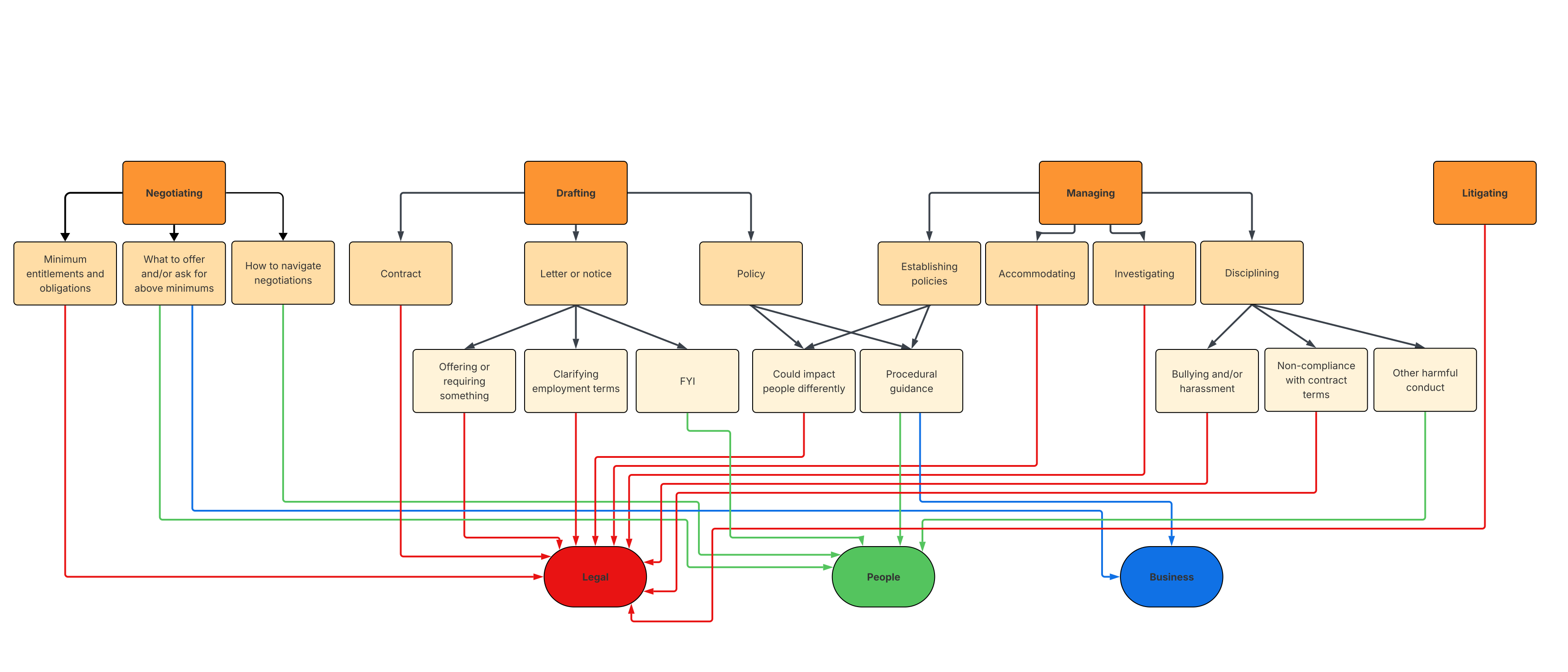
Negotiating
An unassumingly large array of workplace issues involve negotiation, including any time that an employer wants to terminate an employee or change their employment terms. Even if a first offer is accepted, it was likely made following some assessment of the amount of pushback expected (hence, negotiation).
The key first step in any negotiation is understanding the parties’ minimum entitlements and obligations, and this requires legal expertise, typically in contract interpretation, relevant legislation, and applicable caselaw. For example, before terminating an employee, employers need to know the minimum notice to which the employee is entitled, any period during which they cannot be terminated, etc. Similarly, if an employer is looking to change an employee’s role, they need to ensure that they honour the employee’s minimum entitlements regarding working location, working hours, pay, duties, etc., absent obtaining a binding agreement to the contrary.
Whether parties want to offer more, above their minimum obligations, and what they want to offer is generally a business or personal decision, and it may also be influenced by what they know about the party across the table, including what they expect that party is willing to accept.
How to then navigate negotiations primarily involves reading people and leaning hard on emotional intelligence to reach a successful result. When to initiate or respond, how to phrase things, and who should be in the room are all questions that rely on experience and people skills to answer. Although many of these issues are not technically legal in nature, employment lawyers have years of experience combining their knowledge of both the law and human behaviour in countless workplace scenarios, so while you may be able to navigate these negotiations on your own, employment lawyers can often provide valuable insight and advice.
Drafting
To increase the likelihood that your contracts are enforceable, we recommend involving an employment lawyer, or at least having a lawyer review your final draft. Lawyers are specifically trained to clearly articulate in writing exactly what parties want to agree, minimizing the risk that confusion or conflict will arise about these purported agreements down the line. Their legal expertise also allows them to spot issues that other parties may not be aware of when drafting contracts.
If you are drafting a letter or notice, such as an employment offer letter, that offers or requires something to or from an employee, it is also wise to seek legal counsel. Among other reasons, letters can inadvertently form binding contracts and raise other legal considerations. Even if you only intend for your letter to clarify existing employment terms, obtaining legal advice can reduce the risk that these terms are misstated or that your communication is misinterpreted.
For the most part, written communications updating employees on day-to-day activities or routine procedures generally do not require legal input, but rather, can benefit from your team’s unique experience and inside knowledge.
Managing
Management scenarios take a variety of different forms, including establishing policies, accommodating, investigating, and disciplining. While each scenario poses its own unique legal, interpersonal, and business risks, some should cause you to pause more than others and seek legal advice before moving forward.
As a general rule, policies that particularize specific procedures for how to complete certain duties do not typically involve a legal element. However, any policies that have the potential to impact some individuals differently than others should be given careful consideration and legal review to avoid allegations of discrimination. There is a significant amount of law surrounding the issues of discrimination and the duty to accommodate. While specific policies and accommodations may necessitate business and people management input, early legal advice can minimize the risk of future human rights claims.
If an employee does make a workplace complaint, especially one involving discrimination, harassment, bullying, or violence, their employer likely has a legal duty to investigate. When this duty arises, as well as who should investigate, how the investigation should be conducted, and what type of report, if any, should be produced are all questions that could benefit from legal advice to ensure compliance with applicable legislation. However, some investigations can then be conducted internally or by a neutral external party.
Following an investigation or other evidence of workplace misconduct, whether to involve a lawyer during the discipline process generally depends on the type of misconduct. If the relevant misconduct involves allegations or findings of discrimination, bullying, harassment, or non-compliance with contractual terms, it is likely a good idea to involve a lawyer. Legal counsel can minimize the risk of future claims arising from steps taken, or not taken, to discipline employees and help ensure that any relevant contract terms are sufficiently enforceable.
Litigating
If you or your organization has been named in a lawsuit, or if you are considering bringing one yourself, we strongly advise involving legal counsel as soon as possible. The rules of court prescribe deadlines for filing and responding to court documents, and lawyers are aware of these and other procedural requirements. Lawyers are also skilled at assessing the strength of party positions and identifying and utilizing available leverage to obtain early settlement, saving their clients money, time, and hassle.
Again, while we cannot anticipate every situation that you may find yourself in, we hope that this article provides a helpful guide for when to call in legal reinforcement. If you do land on the big red oval at the bottom of the flowchart, or if you have questions about anything else, our team would be happy to come alongside and assist.